Regeneration That Reaches Young People
Building a flagship technical education training programme in Hastings.
A pilot that's already working
We are 181st Street, a marketing and communications agency based at St Andrew's Mews. We moved here from London five years ago, renovated three empty units into a creative studio in January 2026, and became a T Level placement provider with East Sussex College.
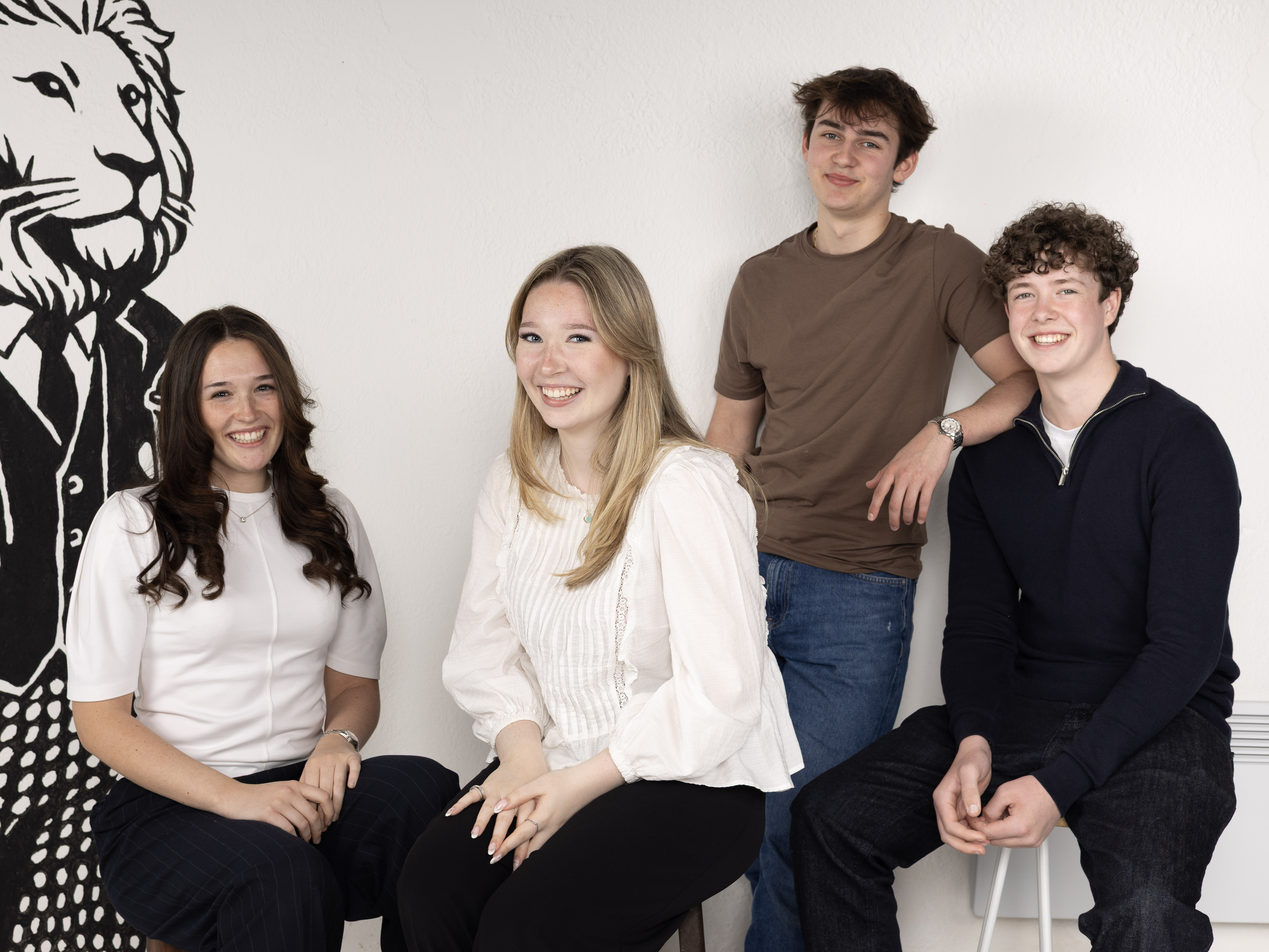
Four 16 to 18 year-olds are on placement with us now, working on live campaigns for national and international brands, and outperforming graduates 3–4 years ahead of them academically.
Technical education is the government's flagship education policy to tackle youth unemployment and the number of young people not in education, employment or training — which passed a million this year for the first time since 2013. In Hastings it is among the highest in Sussex.
At The Studio Hastings, we have a pilot programme already proving the value of technical education, and we're ready to expand.
From a handful to forty a year
We invested £20,000 renovating three units in January 2026 into a purpose-built creative studio, so we could become a T Level placement provider with East Sussex College. This is our recruitment pipeline. The behavioural science we practise is not taught at universities or in industry, so we train our own people from the ground up.
We have applied to the Pride in Place Neighbourhood Fund for £21,125 to expand into the unit next door — to build a dedicated creative skills development space, editing suites, and a soundproofed photography and podcast studio. It would take us from a handful of young people a year to 40, enable us to offer degree-level apprenticeships and give the town a facility that residents can use alongside students.
Skills have to sit alongside the buildings
Improving a place raises what it costs to live there. House prices follow amenity value; wages do not follow automatically. So a young person in a regenerated town faces higher costs in the same low-wage labour market, and leaving becomes the sensible choice.
This is why skills have to sit alongside the buildings.
Investment in a town's fabric raises what the town is worth. Investment in its young people raises what they can earn. Only the second gives them a reason to stay — and it is what keeps the value of the regeneration in the town instead of exporting it.
Pride in Place has to mean pride in the people who live in it.
The facts: education in Hastings
Hastings is the third most deprived district in England. Here is what that means for the young people we're training.
Hastings ranks 3rd of 296 on the Indices of Deprivation 2025, after Blackpool and Manchester. A third of its neighbourhoods are in the most deprived tenth of the country. Hastings has 60% of children living in low-income families, compared to 36% across East Sussex and 38% nationally.
3rd
Hastings is the 3rd most deprived district in England (of 296)
Indices of Deprivation 2025 — after Blackpool and Manchester.
60%
of Hastings children live in low-income families
Against 36% across East Sussex and 38% nationally.
2.6
average GCSE grade for disadvantaged pupils in Hastings
The national average is 4.6. A grade 4 is a pass.
22 months
of learning behind by GCSEs for disadvantaged South East pupils
The widest gap of any English region — and the fastest-widening.
15.3%
of post-16 maths resits reached a pass in 2026
19.8% of English resits did. Both fell for the fifth year running.
23%
of disadvantaged GCSE finishers were in no education or training by Year 12
Against 9.7% of their peers — they are outside the system, not behind in it.
8.9%
of Hastings Year 11 leavers have no plans for education, employment or training
Against 5.6% nationally. Nearly 1 in 4 disadvantaged leavers are NEET by Year 12.
40.9%
of working-age adults in Hastings are low-skilled
Against 32.4% across England — it does not resolve itself later.
The resit doesn't rescue them. The system's answer for young people who fall short at sixteen is to sit the exam again. In 2026, 15.3% of post-16 maths entries and 19.8% of English entries reached a pass. Both fell for the fifth year running.
The gap widens after GCSEs. The national disadvantage gap grows to 3.4 grades across a student's best three qualifications — more than a full grade in every subject they take.
Nearly a quarter are outside the system altogether. 23% of disadvantaged young people who finished their GCSEs in 2023 were in no education or training whatsoever at the start of Year 12, against 9.7% of their peers — a gap of 13.3 percentage points, up from 10.5 in 2020. They are not behind in the system. They are outside it, which is why post-16 attainment figures look better than the reality. You cannot fail an exam you were never entered for.
In Hastings, they leave with no plan at all. 8.9% of young people finish Year 11 at a state-funded mainstream school with no plans for education, employment or training, against 5.6% nationally. Nearly 1 in 4 disadvantaged Hastings school leavers become NEET (Not in Education, Employment, or Training) by Year 12.
And it does not resolve itself later. 40.9% of working-age adults in Hastings are classified as low-skilled, against 32.4% across England.
Opportunity
Hastings has no dedicated higher education institution. For a young person here, a professional career currently means leaving — and there is little to come back to. We are building a route that runs from sixteen to a degree, without leaving town or getting into debt.
Level 6 apprenticeship starts by under-19s in Hastings run at a handful a year. Adding four would be among the largest proportional increases anywhere in the country.
A T Level Merit is worth 120 UCAS points; entry to a Level 6 degree apprenticeship typically requires 104 to 120. The qualification our students are taking meets the entry requirement for the one that follows it. Degree apprenticeships carry no tuition fees and pay a salary throughout.
The pathway
T Level, with a real 315 hour industry placement in Hastings.
Level 6 degree apprenticeship, salaried, no fees.
A bachelor's degree, four years of professional experience, no debt, without leaving town.
The university route into the same career finishes at twenty-one with three years less experience and an average debt of £47,730 entering repayment, at 9% of income above £25,000 for up to forty years.
What it delivers
- →24 new students a year, indefinitely — 4 now, rising to 24 from year two, with 48 on programme at any one time once both year groups are running.
- →124 young people in five years. 244 in ten.
- →Degree apprenticeships created on our own payroll, with the first cohort reaching graduation in year four.
- →Earnings above the local median. Marketing careers start around £22,000 and pass £40,000 within five years — above the national median wage of £39,039 and well above Hastings' £26,396.
And there is somewhere for them to go
The gap in Hastings has never been demand for these skills. It has been any way of teaching them locally.
Regional employers are hiring. Our analysis of roughly 900 entry-level job postings over four years across a 30-mile corridor — Eastbourne, Lewes, Bexhill, Tunbridge Wells, Ashford — found between 150 and 300 entry-level marketing, communications, digital content and ad operations vacancies advertised each year.
Most of them do not require a degree. Around 70% of junior digital, content and marketing roles ask for applied skills, a portfolio and strong copywriting rather than academic credentials. A Level 3 technical qualification with 315 hours of real agency work fits that requirement directly.
There is no risk of flooding the market. If every one of our students went into the regional labour market rather than staying with us, they would fill between 7% and 13% of the vacancies that already turn over each year.
A model that pays for itself
The usual problem with a funded project is what happens when the money runs out. Most don't survive it. This one doesn't have that problem, because what pays for it is a business rather than a grant.
We sell local businesses marketing at a price they can afford, subsidised by our national and international client income. That work is what the students learn on.
Micro-retainers — £400 / month inc. VAT
For work that lists at £1,200 plus VAT — around £10,400 a year of professional marketing, at roughly a quarter of its commercial price. Aimed at high-street micro-businesses in East Sussex.
B2B retainers — £1,000 / month + VAT
For established local service and B2B firms across East Sussex needing higher-tier growth marketing.
Each retainer supports between one and three T Level students, giving them live campaigns, real clients and a portfolio — and covering their software seats, travel and daily hosting costs.
The businesses get marketing they could not otherwise buy. The students get experience they could not otherwise get without leaving the town.
It is not a theory. It is already running.
Four local businesses signed up in the first 60 days — around one in six of the retainers the programme needs to fund itself, reached in two months, with more in the pipeline.
Full self-sufficiency needs 15 micro-retainers and 8 B2B retainers — £14,000 a month, £168,000 a year. At that point the local retainer income covers student costs, software, travel, equipment and the rent on the expanded space in full.
At the rate of the first two months, that threshold is inside the first year. The constraint on this programme is studio capacity, not customers.
What it is worth to the businesses
For every £1 a local business spends with us, we return an estimated £4.81 in attributable sales growth. Around 60% of new businesses fail within five years, and after cash flow the biggest causes are demand-side — no market, or being out-competed. Those are precisely the problems marketing addresses, and precisely the capability a micro-business cannot afford to buy.
And the public money is spent once
£22,000, one payment. No revenue funding, no ongoing subsidy.
£170 of public money per young person across the first five years — £87 over ten, because the capital is spent once and the building keeps working.
Then it tapers to nothing. As retainer volume grows and T Level graduates progress into full-time roles, earned income replaces the grant entirely.
Buildings need maintaining. Skilled people generate wealth.
Economic impact
For two decades, seaside regeneration in Hastings has focused almost exclusively on building assets for visitors rather than building earning power for residents.
Landmarks and culture have raised the town's profile, but Hastings remains the 3rd most deprived local authority district in England, with secondary education outcomes ranking in the bottom 1% nationally.
By operating as an export-driven commercial anchor that earns ~85% of its turnover outside the region, 181st Street generates net new capital rather than recirculating existing local wealth.
The multiplier
£2.31 of local economic activity for every £1 the agency earns, on the New Economics Foundation's Local Multiplier 3 method — against 1.30 to 1.60 for a typical UK service business, and Hastings Borough Council's own creative and cultural multiplier of 1.51.
The programme generates value through several separate channels:
Channel one: wages
Each young person hired from the programme starts on around £22,000 and earns £40,000-plus within five years — above the national median wage of £39,039.
Four hires a year, sustained, means 16 local graduates on the payroll by year four — £352,000 of gross annual salary, of which roughly 87.5% is spent in the town.
Applying the multiplier to that local spending gives £711,480 a year of local economic activity by year four.
Research across UK cities finds each creative job supports a further 1.9 non-tradable local jobs — the hospitality, retail and service roles that exist because people who live here have money to spend here. That is 30 further local jobs supported by year four.
Channel two: local businesses
Micro and small enterprises make up the overwhelming majority of businesses in Hastings, and around 60% of new businesses fail within five years. After cash flow, the biggest causes are demand-side — no market, or being out-competed. Those are the problems marketing solves, and the capability a micro-business cannot afford.
15 micro-retainers and 8 B2B retainers at full capacity — £168,000 a year of professional marketing bought at a fraction of its commercial price.
For every £1 a local business spends with us, we return an estimated £4.81 in attributable sales growth. Across the full retainer portfolio that is around £808,000 a year of additional turnover for Hastings businesses.
And the businesses keep the difference between what the work costs and what they pay for it — over £250,000 a year retained in local cash flow that would otherwise have gone on marketing, or more likely never been spent at all.
Channel three: what it does to a life
A young person entering hospitality or retail in Hastings starts at £17,300 to £22,000 and stays broadly flat for a working life.
A young person leaving this programme with a portfolio and a reference enters junior communications roles across the region, progressing to mid-level pay within a few years.
Over a thirty-year career the difference against the local low-skilled baseline runs to several hundred thousand pounds per student — earned without debt, against the £47,730 average balance a university graduate carries into repayment.
Channel four: the household gap
Only 15.6% of Hastings households have someone in a professional or managerial occupation. Across England and Wales it is 23.3%. That difference is around 3,100 households — the structural deficit that two decades of investment in buildings has not touched, because buildings do not change what people earn.
| Horizon | Young people through the programme | Share of that gap |
|---|---|---|
| 5 years | 124 | 4.0% |
| 10 years | 244 | 7.8% |
| 20 years | 484 | 15.5% |
Over twenty years that is a young person from roughly one in every eighty-four Hastings households put onto a professional trajectory, in the town.
What has already been tried
This is not an argument against culture. We are a creative business, and what we train young people to do — photography, film, brand design, campaign work — is the creative industries. Hastings has one of the most vibrant cultural scenes in the south of England and the Neighbourhood Board is right to champion it.
The argument is about which half of the creative economy has been funded. Hastings has funded the part of the creative economy people visit. It has never funded the commercial part young people earn a living from.
Since the 1990s the dominant model of seaside regeneration has been the same: build or restore a landmark, usually a gallery, and let the visitor economy follow. It works. Visitors come, profiles rise, and towns that were written off become places people want to see. The question is what it does for the people who were already there.
St Ives
Tate St Ives, 1993. Around 500,000 day-trippers a year and £10m of visitor spend. Second homes reached 25% and local people were priced out, with wages seasonal and flat.
Bexhill
De La Warr Pavilion, 2005. Around £16m of regional economic value. Twenty years on, surrounding wards remain in the most deprived 1% nationally.
Margate
Turner Contemporary, 2011. A £349m visitor economy and a revived high street. Thanet still has the highest youth unemployment in the South East, and its young people still lack entry routes outside hospitality.
Folkestone
A creative quarter housing around 600 creative workers, built on a single benefactor. Effective, but with a single point of failure and no progression pipeline attached.
Improving a place makes it more desirable. Desirability attracts capital and incomers. The gains land disproportionately with people who own property or arrive with money, rather than with people who were already there.
Hastings has already run this experiment
Hastings Contemporary opened in 2012. The Pier reopened in 2016 and won the Stirling Prize. The town joined the Coastal Culture Trail and bid for UK Town of Culture on a platform of social mobility and youth opportunity.
More than a decade later, Hastings ranks 3rd of 296 English districts on the Indices of Deprivation 2025.
The flagship step happened, and Hastings did it well, and did it early. It did not close the gap — because that is not what flagship investment is for.
What worked instead
Two places broke the pattern. Neither did it with a building.
Brighton
The Brighton Fuse research found that firms combining creative, digital and commercial skills grew three times faster than their peers. What constrained the cluster was not premises or profile. It was the supply of people with those skills.
Dundee
A games degree at Abertay anchored a cluster that drew around £400m of inward investment and a 164% rise in local economic output. Talent retention kept the wealth circulating locally.
Both invested in people, and both kept the value in the town because the people stayed. Hastings has no university — but it has a national technical qualification, a further education college already delivering it, and an employer able to train and host students on live commercial work. That is the same mechanism, assembled from what the town actually has.
And it is what Parliament concluded
In 2019 the House of Lords Select Committee on Regenerating Seaside Towns reported after a full inquiry, making thirty-eight recommendations. Its conclusions were that seaside towns need better transport, housing and broadband — and better access to further and higher education for young people. It went further, recommending that government fund local authorities to cover the full public transport costs of post-16 students, because getting to education is itself a barrier in towns like this one.
What legacy actually needs
Coventry's year as UK City of Culture engaged almost half the city and brought millions into the local economy. Two years later, in 2023, the trust set up to deliver it collapsed into administration with debts of over £4 million, staff were made redundant and the legacy programme ended early.
The year worked. The organisation built to carry it forward did not.
That is the lesson worth taking. Bodies created to deliver a single moment are fragile. What makes a legacy last is being attached to something that was going to exist anyway — a college, an employer, an institution with its own income and its own reasons to keep going.
This programme runs on a national qualification, an existing college and a working business. If the funding stopped tomorrow, all three would still be here.
What the town gets
The studio was built to train young people, but it is a piece of professional infrastructure that Hastings did not previously have. We make it available to the town — and we give away a fixed share of the agency's time to local causes.
A professional studio that Hastings can use
£10 an hour
Our London-grade photography and video studio is open to local photographers at a rate set to cover wear and utilities, nothing more. The nearest comparable commercial space is in Brighton at around £500 a day.
Kit included
Backdrops, commercial lighting rigs and production accessories come with the hire, so a local freelancer does not need to buy or transport equipment to take on professional work.
This is access, not just a discount. The point is not that Hastings photographers were paying Brighton prices. It is that most of them were not shooting in a studio at all, because there wasn't one they could reach or afford. A day's professional studio hire in this town now costs £80.
Without the expansion, this stops. The photography studio becomes desk space two days a week to accommodate students. The community loses a facility it currently has.
Teaching what we know
Masterclasses every two months, led by three agency photographers with international commercial careers, each session open to around twenty local amateur and emerging photographers.
Advanced lighting, digital composition, workflow, commercial studio practice — the things that separate a good photographer from a working one.
One regular had never taken his camera off automatic before he came.
Keeping campaign budgets in Hastings
We run a local creative directory — photographers, models, hair and makeup artists, stylists, production crew. When a national or international client needs a crew, they get a Hastings crew.
Production budgets are the largest single spend on most campaigns, and they normally leave for London or Brighton by default. Every shoot we crew locally converts imported client money directly into income for Hastings freelancers.
Ten per cent of our time, given away
We ring-fence a tenth of total agency staff time for pro bono marketing, media production and campaign work for Hastings charities, community groups and civic projects. This year that has included:
Seaview
Campaign strategy, donor outreach and a two-week fundraising drive supporting frontline services and the opening of the only move-on accommodation for homeless people in Hastings. £15,000 raised or committed so far.
Hastings Botanical Garden Project
Brand building, digital training and fundraising strategy.
These organisations get London-standard creative work they could not otherwise commission, and they get it without spending donated money on it.
And footfall, in a Mews that needs it
Forty-eight students, agency staff, masterclass attendees and studio hirers, in and out of St Andrew's Mews every week — plus around £9,000 a year through a local café providing student lunches.
Why us
We have already spent what we are asking you for.
We moved the agency out of London. We took three empty units in St Andrew's Mews and renovated them into a working creative studio. We designed it, from the outset, to host T Level students — desks, kit, supervised capacity, a photography and video studio built to London standard.
That cost around £20,000 of our own cash, on a ten-year lease, before we asked anyone for a penny.
We are now asking for £22,000.
We have already matched it.
We are not asking to fund an idea
- ●Four students are on placement now, building campaigns from scratch for international luxury fashion houses. At sixteen and seventeen. From a studio in Hastings.
- ●Four local businesses signed subsidised retainers in the first 60 days, funding the students' costs and giving them live clients to learn on.
- ●We are a confirmed delivery partner for East Sussex College's Business T Level and its new Marketing T Level.
- ●BBC South East filmed here for back-to-school week. The Hastings Independent ran a full page.
- ●Seaview has raised or been committed £15,000 off the back of pro bono work we gave them this year.
Most funding bids are a promise. This one is an expansion.
We know how to do the work
- ●We have been recognised in the Performance Marketing World 100 for three consecutive years.
- ●We have a strong portfolio of national and international clients across luxury fashion, FMCG and consumer brands, with a US division alongside the UK business.
- ●Our Senior Managing Partner writes a weekly behavioural marketing column for The Drum, lectures on MBA programmes, has been named twice in the PMW Powerlist, and is a published author.
- ●Around 85% of our income is earned outside the region — money brought into Hastings rather than recycled within it.
We are not a local business asking for help to survive. We are an exporting business asking for room to train more local young people.
Nobody else here can absorb the cost
T Levels depend on a compulsory 315-hour industry placement in a real workplace. This is the hardest part of the whole system to supply, and the numbers show it. The National Audit Office found the Department for Education had budgeted £1.94bn for T Levels to the end of 2024-25 and spent £1.25bn — a £688 million underspend, with student forecasts missed by three quarters. Of the £8.5m paid out to help employers host students, over £3.9m was clawed back unspent, because it arrived in arrears, against receipts, needing cash reserves small firms don't have. When placements still didn't materialise, the Department relaxed the rules to allow remote working.
Around 800 people work in Hastings' creative sector across roughly 260 organisations — three people each. A three-person business cannot absorb a 315-hour supervised placement. Not for want of willingness. Because of arithmetic.
Any employer could do this. Almost none have.
Why this is the safest £22,000 on the table
- ●It is a hiring decision, not philanthropy. The behavioural marketing we practise cannot be reliably recruited, so we train it. The programme survives because the business needs staff — not because anyone stays enthusiastic about it.
- ●There is no year two. One capital payment. No revenue funding, no ongoing subsidy, no coming back.
- ●We are not going anywhere. We moved our families here. Our parents followed. The lease runs for ten years.
Pride in Place has to mean pride in the people who live in it.
We're ready to expand. The pilot works. What we need is the space.
Read our story